
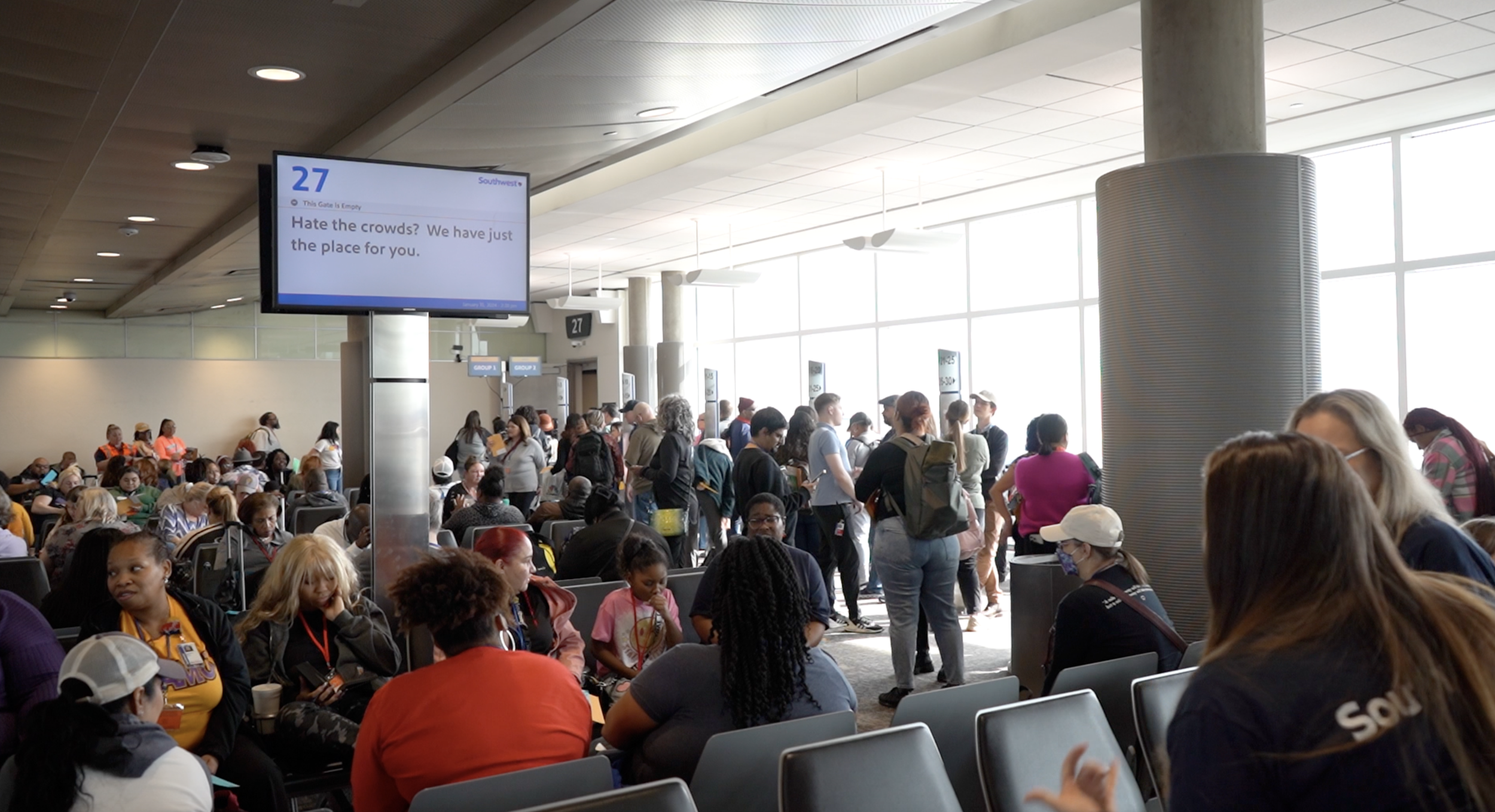
Redefining the Boarding Experience
Airline
Overview
Our team tackled a transformative two-and-a-half-year project exploring assigned seating implementation for a major airline, balancing operational efficiency, customer experience, and commercial objectives. This complex initiative required deep collaboration across data and design specialists to reimagine a core aspect of the airline’s service model while preserving operational excellence. My contribution focused on creating a series of increasingly focused test environments to thoroughly evaluate new boarding concepts without disrupting actual operations. By progressing from broad computer simulations to highly specific experiential walkthroughs, we gathered comprehensive insights that balanced operational efficiency, customer experience, and commercial objectives.
Goal
Create immersive testing environments and protocols that could accurately simulate the entire passenger journey under a new assigned seating model, allowing us to gather meaningful insights without testing in live operational settings.
Outcome
A validated assigned seating strategy that improved boarding consistency by 10% and reduced boarding times by 2-4%, developed through a progression if increasingly specific testing environments that successfully revealed both broad operational impacts and nuanced experiential factors.
My Role
Lead Designer
Methods
Environmental design for simulated spaces, experience journey mapping, physical and digital prototype creation, field guide development, multi-method data collection protocols, participant recruiting and screening, observational research frameworks, service staging and role play, WOZ guided interviews
Tools
Year
2023 - 2026
3D modeling, Figma, Figjam, Typeform, GoPro, Respondent, WOZ system
Testing Methods
To thoroughly evaluate assigned seating concepts without disrupting airline operations, we developed a strategic progression of testing environments—each designed to reveal different aspects of the boarding experience. Starting with broad computer simulations that established baseline metrics, we moved through increasingly focused physical tests to examine real-world behaviors and specific user interactions. This methodical narrowing of focus allowed us to validate quantitative predictions while uncovering qualitative insights that wouldn't have been visible in data alone. Each testing phase built upon learnings from the previous one, creating a comprehensive understanding of how assigned seating would impact both operational efficiency and passenger experience.
Computer Simulation
Our initial testing phase used data models to broadly evaluate different boarding strategies at scale. I worked closely with our data science team to ensure the simulations considered passenger behavior patterns and operational constraints. These models allowed us to rapidly test thousands of scenarios, identifying promising approaches that warranted further investigation. The computer simulations provided baseline metrics for boarding times and efficiency, creating hypotheses we could validate through physical testing.
Large-Scale Physical Simulation
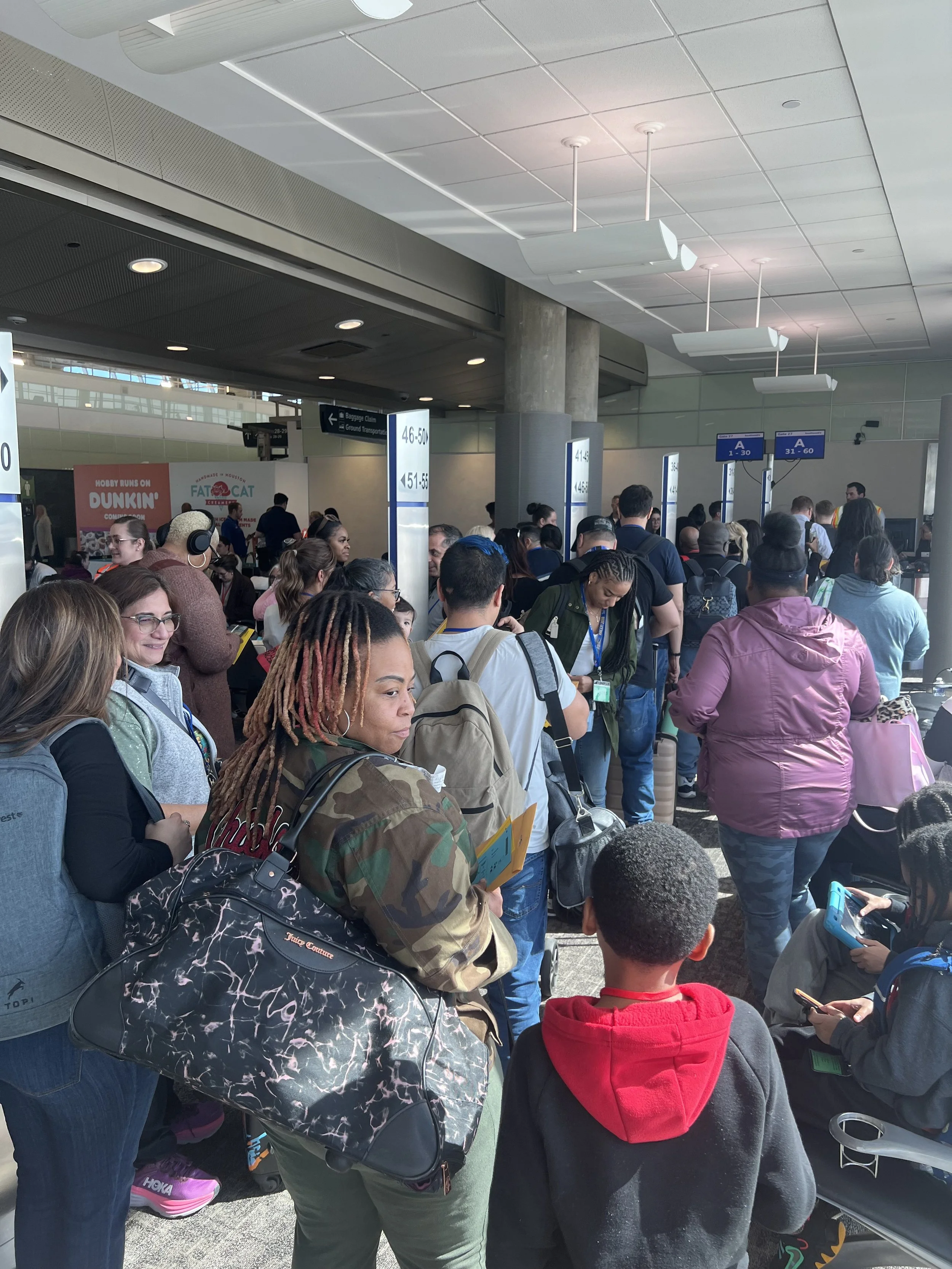
To verify our computer models and evaluate real-world behavior, I designed an extensive in-person simulation with over 400 participants across 11 rounds of testing over two days. I personally created over 4,400 boarding passes and coordinated multiple research teams collecting observational data, surveys, and interviews. This large-scale test validated that our computer simulations accurately predicted boarding times within one standard deviation and revealed that sequenced boarding improved efficiency by 14% while creating unexpected perception challenges among passengers.
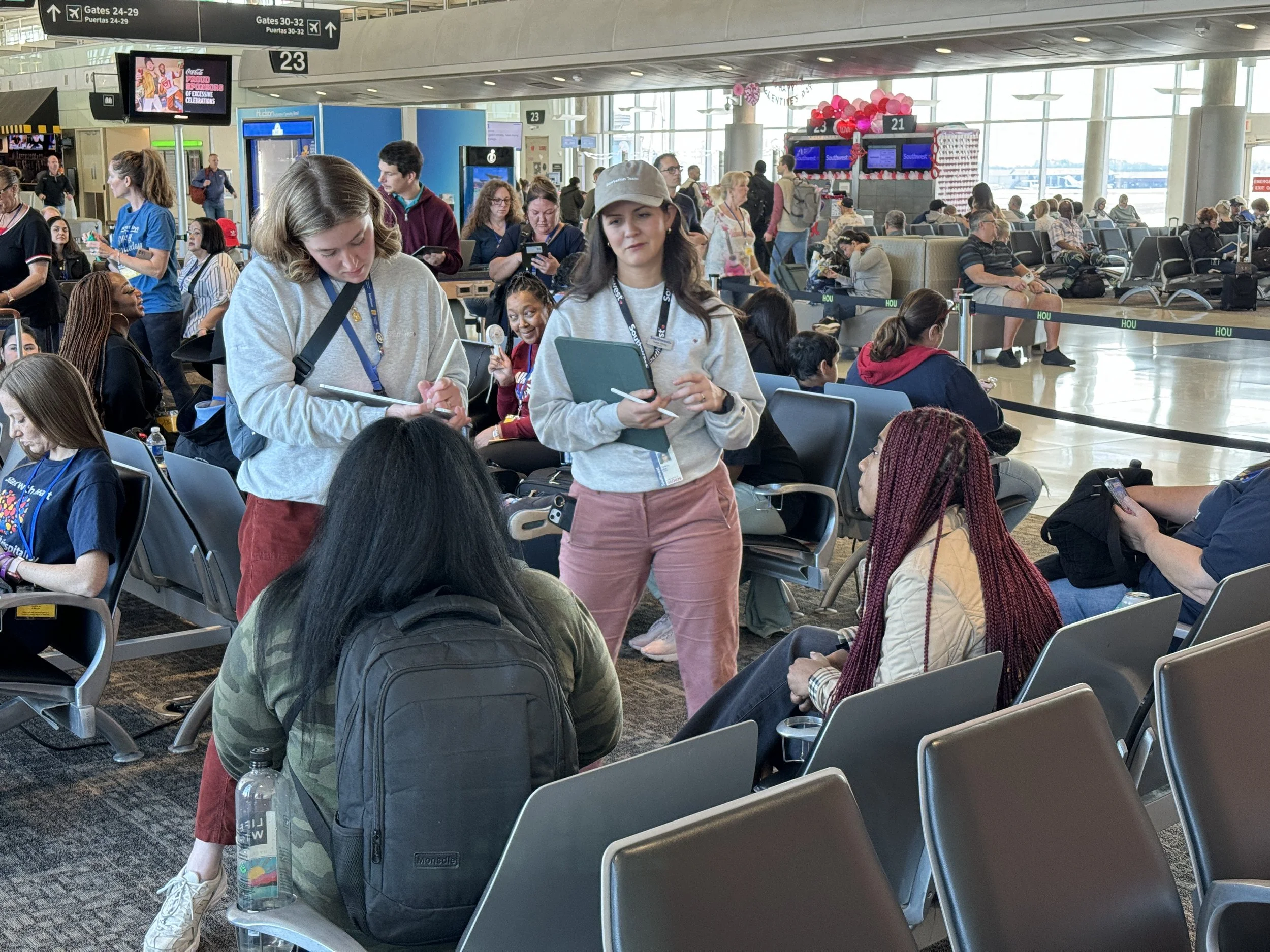
Gates staffed with researchers gathered feedback from participants in between rounds.
Tools & Techniques
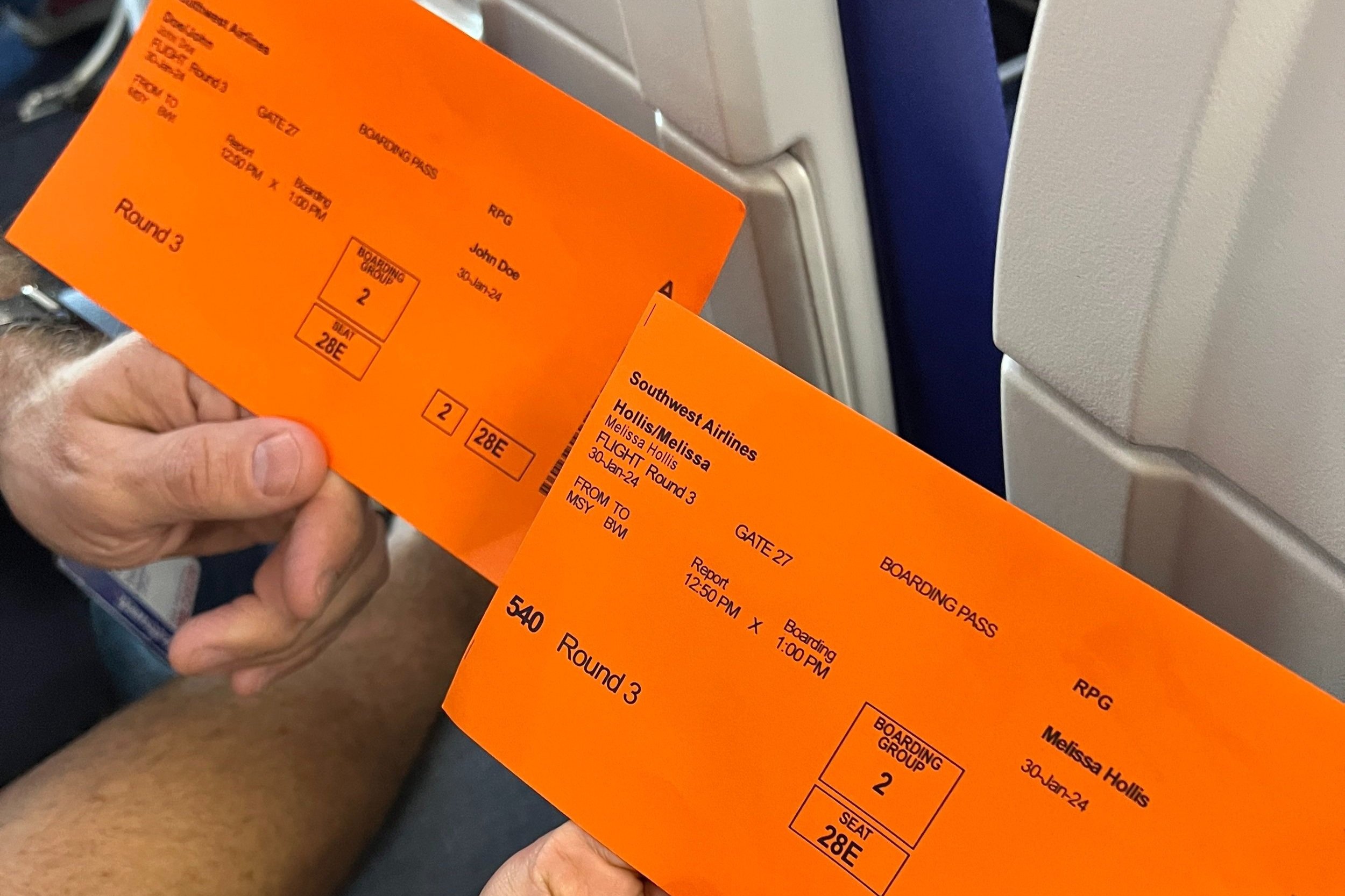
Supplemental elements like boarding passes, gate signage, and actual employees added to the experience of the testing environment.
Focused Congestion Simulation
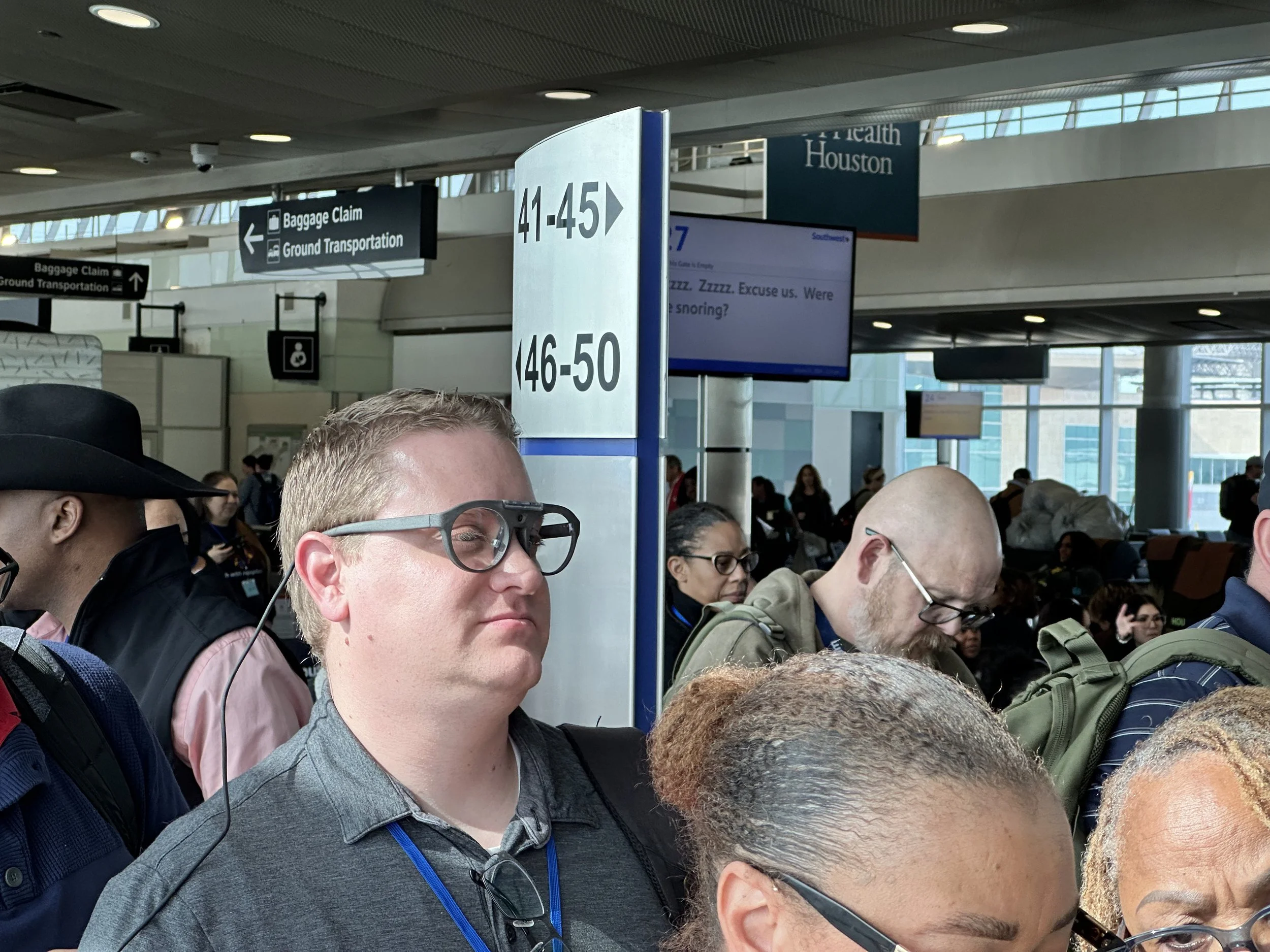
Particpants wearing eye tracking glasses gave us further insight and helped inform the boarding process
Building on insights from our large-scale test, we developed a more focused simulation specifically examining gate congestion with 118 participants. Using actual passenger manifests from five previous flights, this test created realistic density conditions at the boarding gate. I designed the physical environment to replicate spatial constraints and observed how different passenger types moved through the space. This targeted approach revealed that only about 1% of flights would experience negative congestion impacts, while identifying specific scenarios where passenger group sizing created inefficiencies.
Experiential Walkthrough
For our most detailed testing phase, I created end-to-end journey simulations that guided individual participants from booking through boarding. Unlike previous tests focused on aggregate movement, these walkthroughs examined specific user types (frequent travelers, families, preboards, etc.) experiencing each touchpoint in the proposed system. I designed realistic interfaces for booking and check-in, created boarding passes and gate signage, and developed interview protocols to capture detailed feedback at each journey stage. These intimate sessions revealed critical insights about mental models, expectation alignment, and transition moments between digital and physical experiences.
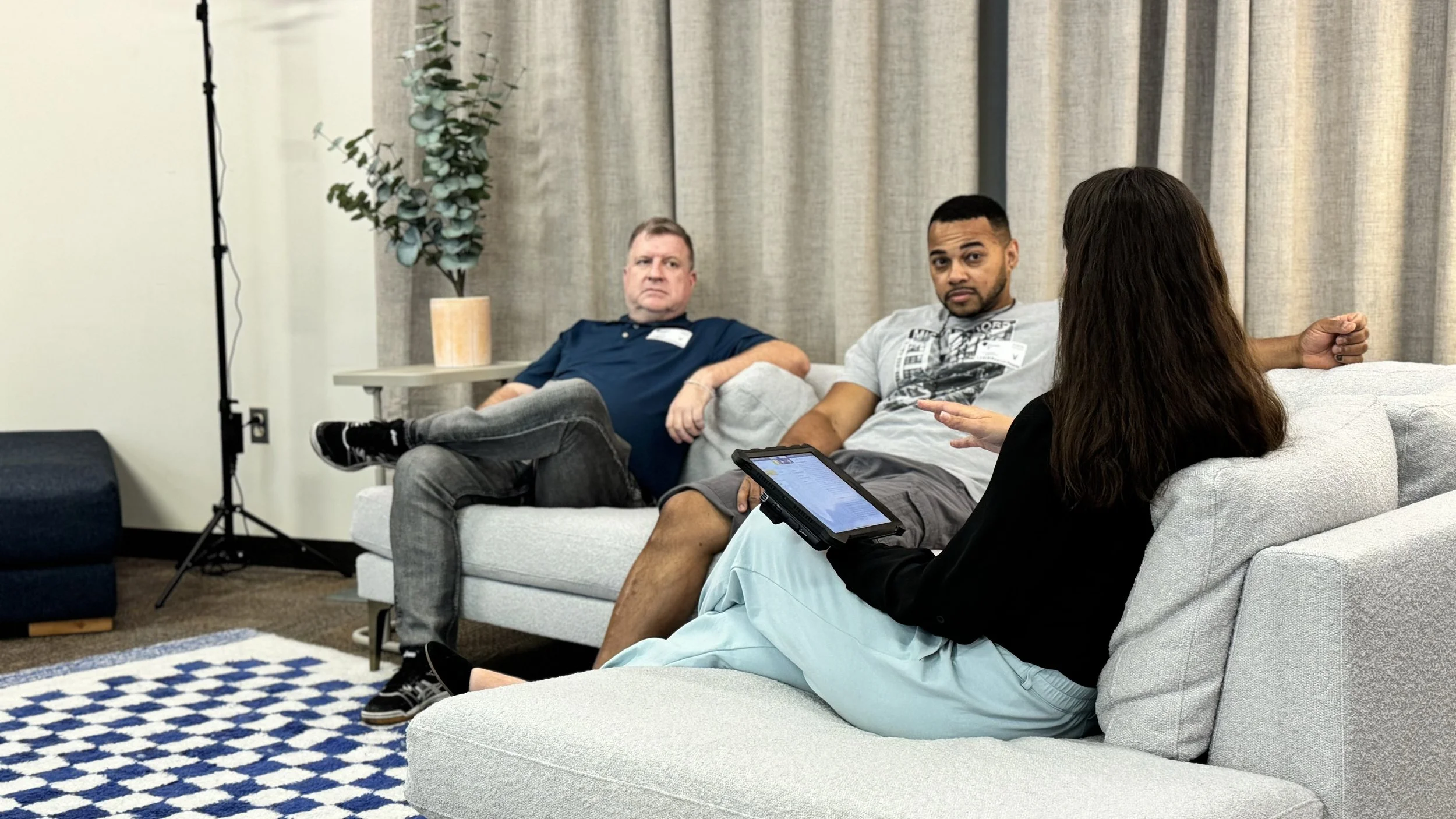
A built out home environment allowed participants to imagine the start of their journey.
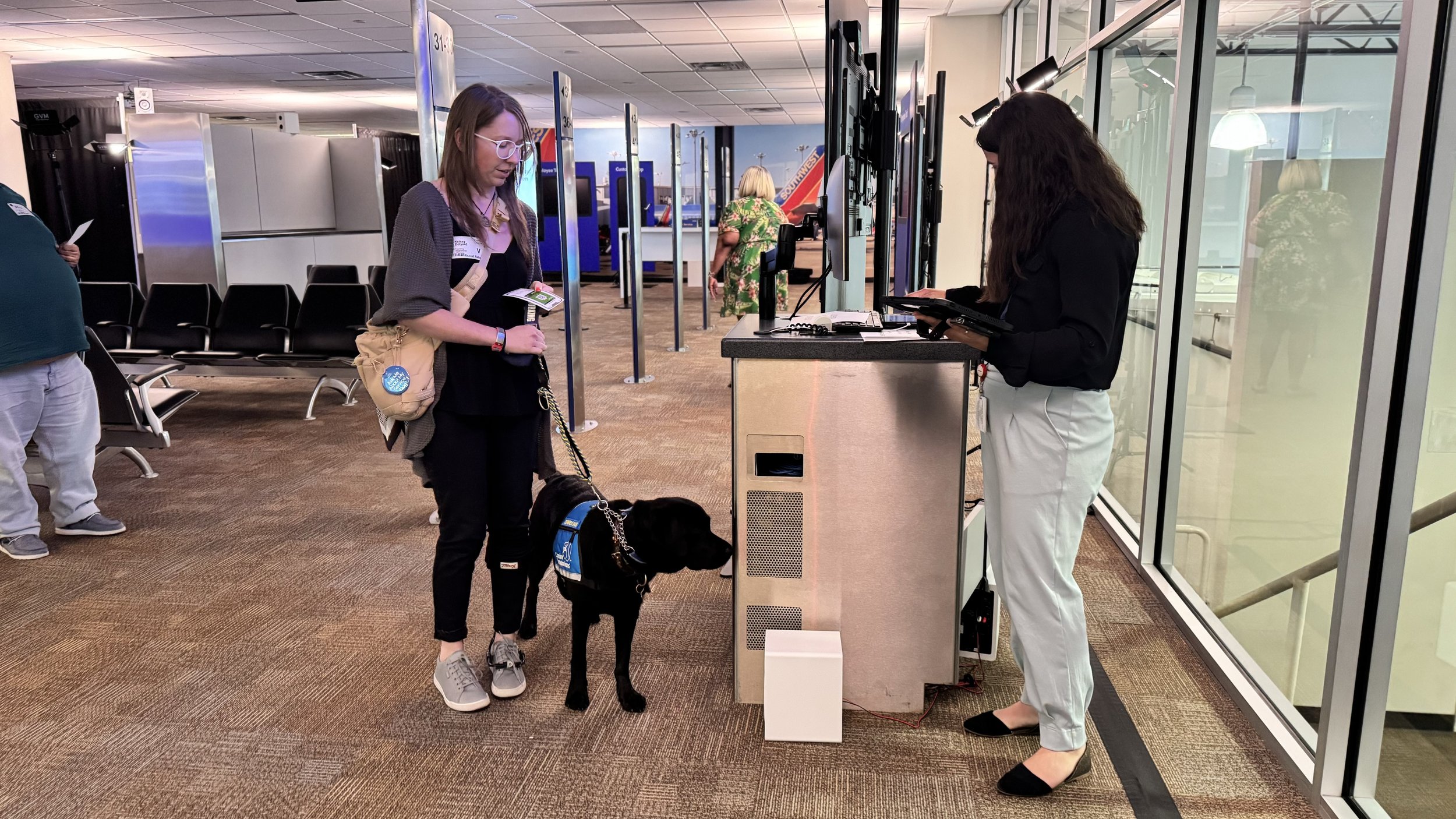
Small focus groups allowed us to target specific Passenger and gather specific feedback
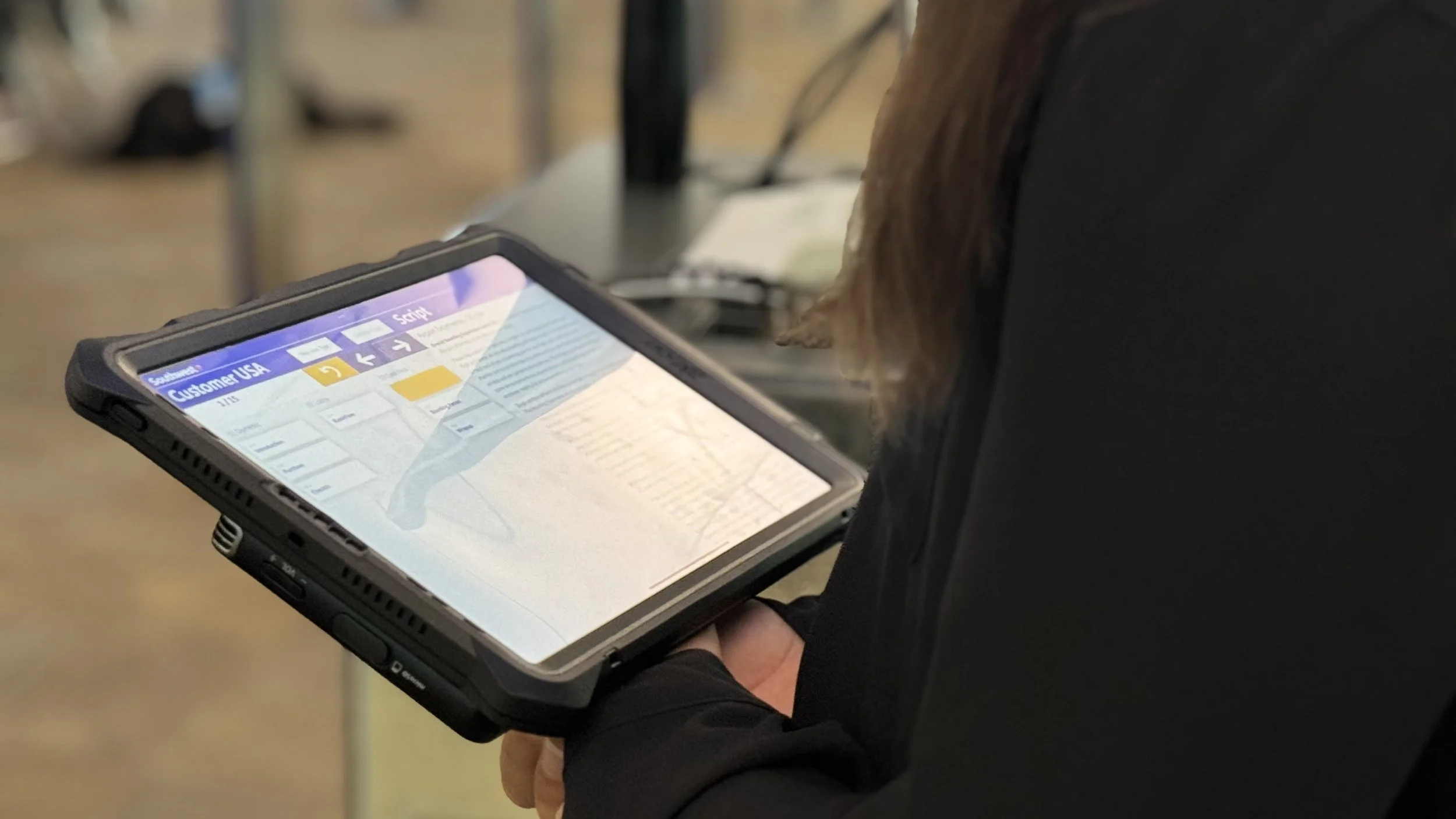
Driving this experience through a WOZ allowed for seamless transitions throughout the environment.
Creating authentic testing environments required a diverse toolkit that balanced research rigor with experiential realism. I employed multiple complementary techniques to capture both observable behaviors and subjective experiences throughout the passenger journey. From realistic physical artifacts that triggered natural responses to participatory design sessions that uncovered unspoken preferences, these tools worked together to provide a multi-dimensional view of how the proposed boarding system would function in practice. The combination of environmental design, comparative testing, and interactive techniques created a research ecosystem that delivered actionable insights while maintaining the authenticity essential for predicting real-world implementation outcomes.
Environmental Design Tools
To create authentic testing environments, we developed modular physical elements including boarding lanes, gate counters, and seating areas that could be reconfigured between test rounds. Realistic signage systems were produced to match the airline's visual identity while incorporating new information architecture for assigned seating. These environmental elements were critical in establishing the context that elicited authentic passenger behaviors.
A/B Testing
For digital interfaces and boarding pass designs, I created multiple variations to evaluate which best supported passenger understanding and movement. These A/B comparisons revealed subtle but important differences in how information hierarchy affected behavior, particularly for passengers unfamiliar with assigned seating processes.
Design Sessions
In selected workshops, we invited participants to create their own ideal boarding passes and signage, providing templates and materials for them to express their preferences directly. These sessions uncovered passenger priorities and mental models that hadn't emerged through standard testing, informing our final designs with direct user input.
WOZ Driven Interview Methods
To test complex interaction scenarios without building full technical systems, we developed Wizard of Oz protocols where facilitators manually simulated system responses to passenger actions. This technique was particularly valuable for testing special cases like family boarding, seat changes, and irregular operations that would have been difficult to fully automate in a test environment.
Realistic Artifacts
I created high-fidelity boarding passes, mobile boarding screens, and confirmation emails that matched the airline's existing design language while incorporating new seating information. These artifacts helped participants immerse in the experience and revealed important usability details about information placement and terminology.
Key Learnings
Creating authenticity in controlled environements
I discovered that experiential testing requires a delicate balance between controlled research conditions and authentic experiences. Too sterile an environment yields artificial behaviors, while too much complexity introduces uncontrollable variables. By thoughtfully selecting which environmental elements to replicate in detail and which to simulate more abstractly, I was able to create testing environments that elicited genuine behaviors while maintaining research integrity.
Orchestrating multi-method data collection
These complex simulations taught me the art of orchestrating multipe data colleciton methods simultaneously without disrupting the participant experience. By developing comprehensive field guides and training, I enabled my teams to gather observational data, administer surveys, conduct interviews, and capture video–all while participants moved naturally through the experience. This multi-method approach revealed critical disconnects between what participants reported and how they actually behaved during simulations.
Bridging physical and digital experiences
This project highlighted the crucial interplay between digital interfaces and physical environments. I learned to design integrated experiences that maintained consistent mental models across channels, ensuring that passenger expectations set during digital interactions aligned with their physical experience.
Cross-role testing reveals system tensions
Including both passengers and employees in our simulations uncovered important tensions that wouldn't have been visible otherwise. What seemed intuitive to passengers often created operational challenges for staff, while efficient staff processes sometimes confused passengers. By observing these interactions directly, we identified critical friction points that needed resolution before implementation. This multi-perspective approach transformed our understanding of the system’s requirements and led to more balanced solutions.